Across South Africa, many smaller towns are facing a growing challenge with stray and feral cat populations. These cats often live behind shops, near factories, on farms, around residential properties, at schools, or in abandoned buildings. Some are born outdoors and have never known a home, while others were once pets that became lost, abandoned, or unsterilised.
In larger cities, animal welfare organisations and veterinary services may be more accessible. Smaller towns, however, often have fewer resources, limited veterinary support, long travelling distances, and very little funding for community cat programmes. In many cases, the responsibility falls on ordinary residents who use their own money to feed and care for local colonies.
These caregivers do important work, but feeding alone cannot solve the problem. Without sterilisation, even a small group of cats can continue producing kittens, placing further pressure on already limited food, shelter, and veterinary resources. This is where Trap-Neuter-Return, commonly known as TNR, becomes so important.
What Is TNR?
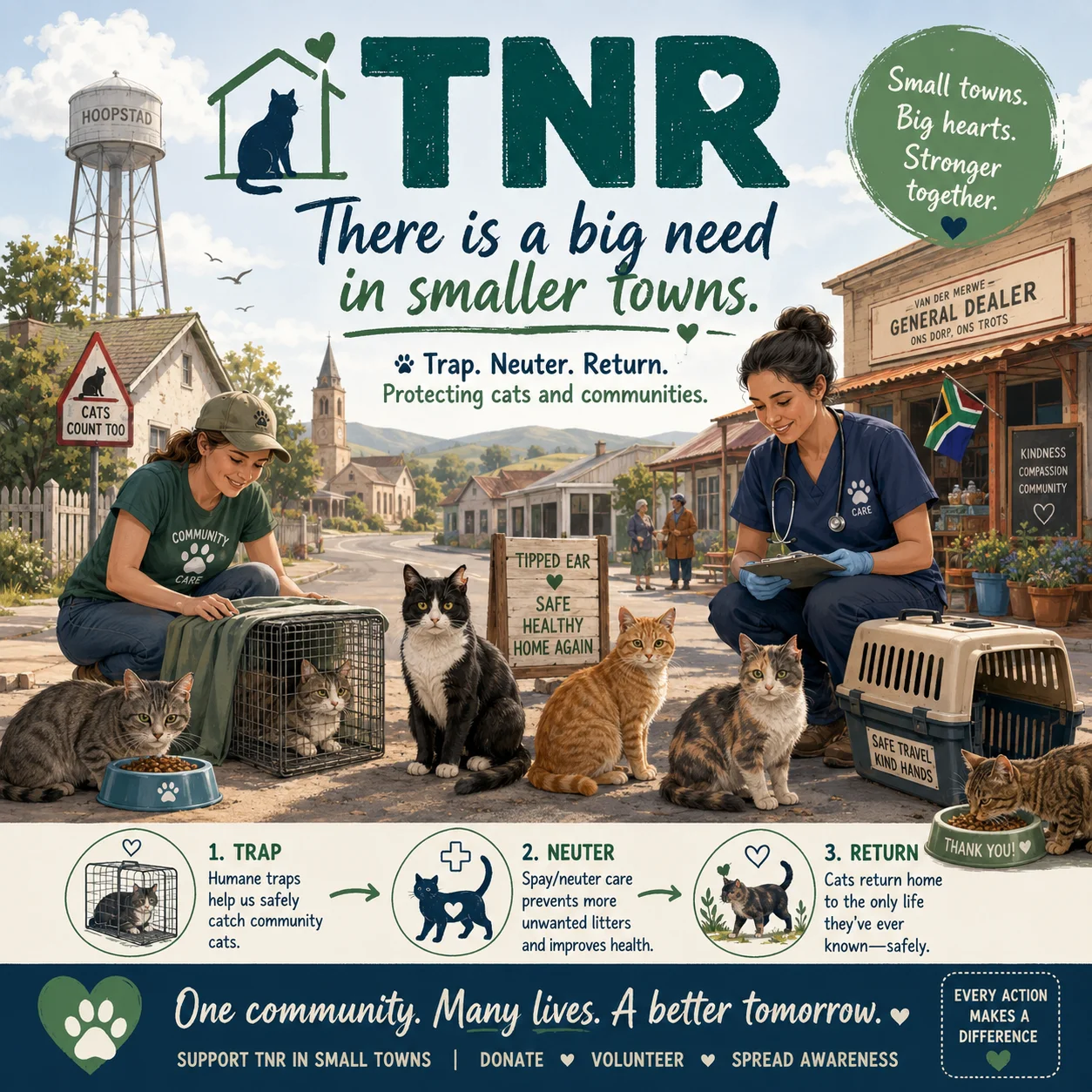
Trap-Neuter-Return is a humane method of managing stray and feral cat populations.
Cats are safely captured using humane traps. They are then taken to a veterinarian to be sterilised, checked, and treated where possible. After recovery, cats that cannot be responsibly rehomed are returned to the familiar area where they were living.
An ear tip is often used to identify a sterilised community cat. This is a small, visible mark made while the cat is under anaesthetic, allowing rescuers and caregivers to recognise that the cat has already been through the TNR process.
TNR helps prevent future litters while allowing established cats to remain in the territory they already know. Over time, properly managed colonies can become smaller, healthier, and more stable.
Why Smaller Towns Need Support
TNR can be difficult to organise even in well-resourced communities. In smaller towns, the challenges can be far greater.
There may be no local animal welfare organisation, no dedicated traps, and no volunteers available to transport cats. The nearest veterinary clinic may be far away, and sterilisation costs may be beyond what local caregivers can afford. Some communities may also lack reliable information about responsible colony management.
As a result, one caring person may find themselves feeding ten, twenty, or even more cats with very little assistance. They may recognise the need for sterilisation but have no practical way to arrange it.
Without outreach, these communities can easily be forgotten.
The Importance of Veterinary Outreach
A successful TNR outreach programme requires far more than food. It depends on trained veterinary professionals, safe equipment, transport, medication, recovery spaces, volunteers, education, and proper follow-up care.
Veterinary outreach can bring essential services closer to communities that would otherwise struggle to access them. It can provide sterilisation, basic health assessments, vaccinations where appropriate, parasite control, wound treatment, and guidance for local caregivers.
Outreach also allows animal welfare workers to identify urgent situations, including injured cats, abandoned kittens, sick animals, and colonies that are increasing rapidly.
For smaller towns, this kind of support can make the difference between an unmanaged population and a humane, responsible long-term solution.
Why Purrfect Hope Wants to Start a Veterinarian Bursary
Purrfect Hope wants to help create lasting change, not only temporary relief.
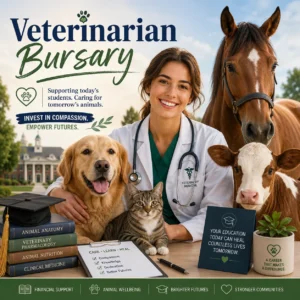
Our Veterinarian Bursary Project is part of a broader vision to support future veterinary professionals who understand the needs of animals in under-resourced communities. By helping a deserving student pursue veterinary medicine, we hope to invest in someone who may one day participate in outreach work, sterilisation campaigns, animal welfare education, and community-based veterinary care.
The bursary itself will not immediately solve the challenges faced by every smaller town. It is a long-term investment in the skills, knowledge, and professional capacity needed to expand meaningful animal welfare work in the future.
As the project grows, our aim is to raise funds not only for educational support, but eventually for veterinary outreach initiatives in communities where TNR services are urgently needed.
Our Long-Term Vision
Our long-term goal is to develop and support outreach programmes that can assist communities with:
- Humane trapping equipment
- Veterinary sterilisation
- Transport to and from veterinary facilities
- Recovery supplies and temporary holding spaces
- Food assistance for managed colonies
- Basic health care and parasite treatment
- Education about responsible feeding and colony monitoring
- Support for local caregivers and volunteers
We want to build partnerships with veterinarians, students, clinics, sponsors, rescuers, businesses, and members of the public who believe that smaller towns deserve access to humane animal welfare solutions.
Feeding and TNR Must Work Together
Purrfect Hope already recognises the important role played by individuals who feed stray and feral cats on their premises. These caregivers provide a lifeline to animals that may otherwise go hungry.
However, responsible feeding should be supported by sterilisation wherever possible. Consistent feeding makes it easier to observe a colony, identify individual cats, notice health concerns, and establish a routine for humane trapping.
When food assistance and TNR are combined, the result is more responsible and sustainable care. Cats receive nourishment, breeding is reduced, illness and injuries can be identified, and caregivers are no longer left to manage growing colonies alone.
A Community Responsibility
The problem of stray and feral cats is not created by one person, and it cannot be solved by one person.
It requires cooperation between caregivers, residents, veterinarians, animal welfare organisations, municipalities, businesses, donors, and volunteers. Education is also essential, particularly around sterilisation, abandonment, responsible pet ownership, and the dangers of allowing unsterilised cats to roam.
Smaller towns may have fewer resources, but they often have strong community spirit. With the right support, local residents can become an important part of effective TNR programmes.
How Support Can Help
Every contribution helps us move closer to our long-term goals.
Support for the Veterinarian Bursary Project can help invest in future veterinary expertise. Support for our feeding initiatives helps caregivers continue looking after vulnerable colonies. Future donations towards outreach can help fund traps, transport, sterilisation, treatment, and recovery supplies.
Even sharing information about TNR can make a difference. Awareness helps communities understand that humane population control is possible and that community cats should not be ignored, harmed, or left to multiply without support.
Small Towns Must Not Be Forgotten
Animals living in smaller towns deserve the same compassion and protection as animals living in major cities.
The need may be less visible, but it is no less urgent. Behind every colony is often a concerned person trying to help with limited means. Behind every outreach opportunity is the possibility of preventing hundreds of future kittens from being born into hunger, illness, and danger.
Through education, feeding support, veterinary training, partnerships, and future outreach, Purrfect Hope hopes to help build a kinder and more responsible future for community cats.
TNR is not a quick solution. It is a patient, practical, and humane commitment to long-term change.
Together, we can support the people who care, invest in the professionals who heal, and bring hope to the animals living in communities that are too often overlooked.


 I'm On Fire - Album