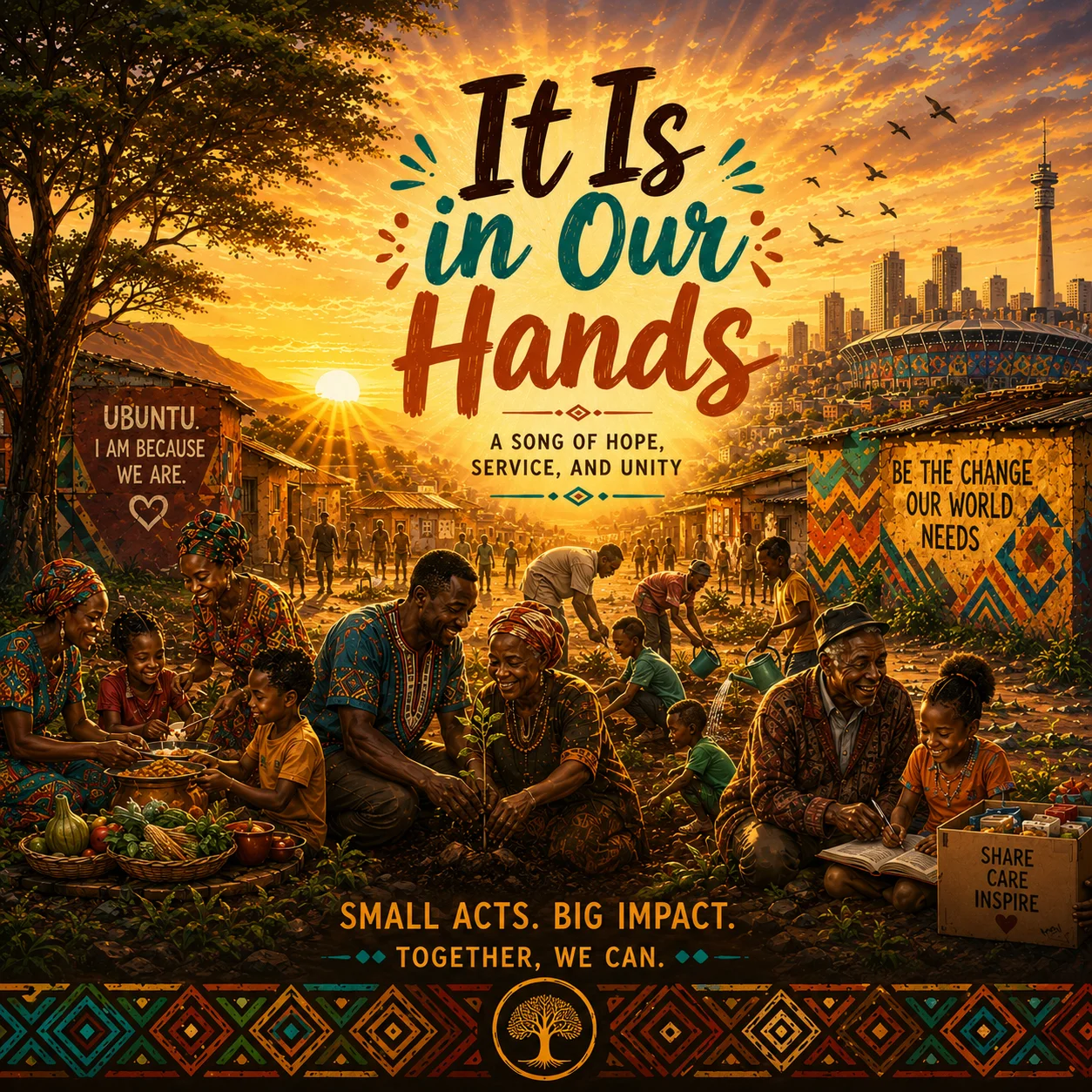
Every year on 18 July, people across South Africa and around the world celebrate Nelson Mandela International Day. The date honours Nelson Mandela’s birthday and remembers a life dedicated to freedom, reconciliation, justice and service to others. Rather than being a day of remembrance alone, Mandela Day is a call for ordinary people to take meaningful action within their own communities.
The official theme for Mandela Day 2026 is:
“It is still in our hands to combat poverty and inequity.”
The words may appear simple, but they carry a powerful responsibility. They remind us that poverty and inequality are not distant problems belonging only to governments, charities or large organisations. They affect people in our neighbourhoods, schools, workplaces and communities. The theme asks every person to recognise that creating a fairer and more compassionate society remains a shared duty.
Why “Still” Matters
The word still is one of the most important parts of this year’s message.
It acknowledges that great progress has been made, but also that Nelson Mandela’s work is unfinished. Many people continue to experience hunger, unemployment, homelessness, poor access to education and a lack of basic opportunities. Inequality continues to separate communities and limit the futures of children who deserve the chance to learn, grow and succeed.
The theme is therefore not only a celebration of Mandela’s legacy. It is also a reminder that his values must continue through the choices we make today. Mandela Day calls on us to move beyond admiration and into action. It is not enough to speak about kindness, equality or justice. We must find practical ways to live those values.
What Does “It Is in Our Hands” Mean?
“It is in our hands” means that change begins with what we are willing to do.
Not everyone can solve poverty on a national scale. Not everyone can fund a school, build a home or support hundreds of families. Yet everyone has something to offer. A person may have time, knowledge, compassion, technology, food, clothing, creativity or the ability to connect someone with the help they need.
One person may prepare a meal. Another may help a learner with schoolwork. Someone else may support an animal rescue, assist an elderly neighbour, plant a food garden or use their professional skills to help a community organisation. These actions may appear small when viewed individually, but lasting change is often built through many people choosing to act together. The official Mandela Day campaign encourages people to identify those in need around them and do what they can to make a meaningful difference with them and for them.
More Than Charity
This year’s theme also asks us to think more deeply about poverty. Helping someone in need is important, but Mandela’s legacy calls us to consider why that need exists in the first place. Poverty is not merely the absence of money. It may also involve limited access to education, nutritious food, healthcare, safe housing, employment, transport and opportunity.
Addressing poverty therefore requires both immediate compassion and long-term commitment. Giving food to a hungry family meets an urgent need. Supporting education, skills development or employment opportunities can help change that family’s future. Caring for an abandoned animal brings immediate relief. Supporting sterilisation programmes, veterinary bursaries and responsible animal welfare initiatives addresses the wider challenge.
True service responds to today’s suffering while also working toward a better tomorrow.
The Spirit of Ubuntu
Mandela Day reflects the African principle of Ubuntu, often understood through the words, “I am because we are.”
Ubuntu reminds us that our wellbeing is connected. A community cannot truly flourish while some of its members remain forgotten, hungry, excluded or without hope. When one person is lifted, the whole community becomes stronger. This spirit transforms service from something we do for other people into something we do with one another. It protects dignity and recognises that every person has value, wisdom and something meaningful to contribute.
Helping others should never make them feel small. It should remind them that they belong.
How We Can Honour Mandela Day
Mandela Day action can take many forms:
- Support a feeding programme, food garden or community pantry.
- Donate clothing, blankets, books or essential supplies.
- Help a child with reading, schoolwork or career guidance.
- Visit or assist elderly and vulnerable members of the community.
- Support animal rescue, sterilisation and veterinary care initiatives.
- Volunteer your professional or technical skills to a nonprofit organisation.
- Clean a public space, plant trees or improve a community facility.
- Raise funds for a cause that creates lasting, measurable change.
- Share the work of trustworthy community organisations so that more people can become involved.
- Continue supporting the cause after Mandela Day has passed.
The most important action is not always the largest one. It is the action that is thoughtful, respectful and genuinely useful.
A Legacy That Must Be Lived
Nelson Mandela’s legacy does not belong only to history books, memorials or public ceremonies. It lives in the decisions people make when they encounter suffering, injustice or need.
It lives when a neighbour chooses to help. It lives when a young person is given an opportunity. It lives when a community protects its vulnerable people and animals. It lives when individuals from different backgrounds work together instead of allowing division to separate them.
Mandela Day reminds us that we do not have to wait for perfect circumstances before doing good. We begin where we are, with what we have, alongside the people around us.
It Begins With Us
The message of Mandela Day 2026 is both a challenge and a source of hope.
Poverty and inequality may be enormous problems, but we are not powerless. Every caring action can become part of something greater. Every person helped, every opportunity created and every act of dignity restored moves us closer to the world Mandela believed was possible.
The future is not shaped by words alone. It is shaped by people who choose to serve, build, teach, protect and care. It is still in our hands. The question is what we will choose to do with them.